I have loved the feel and spirit of the Charlotte Mason approach for years, but there have been a few ideals that have kept me questioning if we could really pull it off. I'm coming at it from a perfectionist perspective, so of course it took some outside "permission" to realize that one of the benefits of homeschooling is that I get to customize my children's education; I am not strictly tied to a single approach. That said, there's a wonderful article that really articulates for me what I found wanting with the idealized Charlotte Mason approach, and the nuggets of wisdom I pulled out of it are below.
CM is a champion of living books, ie. real literature, not watered down so-called "twaddle" that merely scratches the surface of any given topic. I fully agree, with two caveats. 1) I nonetheless see the value of having a history and science "spine text" to give our educational goals a sense of direction, with the subjects touched on here being generously expanded upon precisely by living books. 2) The second caveat is rather new to me as I try to make sense of what exactly it means to lead a Christ-centered life, but the article brings up as valid food for thought: not all so-called classic literature is actually Christian-friendly. So it's not enough to just read living books over texts, or the unabridged versions over the watered-down ones, or ancient texts over modern ones. There really needs to be discernment as to which books provide both the academic content and support the virtues and morals we want to uphold in our family.
Narration, copy-work, and dictation are seen as THE way to teach language arts in the CM method, over any sort of grammar instruction. While I believe all three of these are great ways to enforce spelling, grammar, vocabulary, punctuation, capitalization, penmanship, and even thought organization, I agree with the article that there's no reason to do this to the exclusion of formal instruction. I see formal instruction as a way to catch would-be loop-holes in skill, rather than wondering around leisurely without a guide to lead us.
Nature study! Argh, I have a love-hate relationship with this idea. It sounds so idyllic in theory, but I am very particular about the weather, and it really ruins it for me to try to brave heat and humidity and bugs on one end of the year and multiple layers preventing ease of movement due to the cold on the other end. I get great satisfaction from any opportunity we can spend time outside, even if it's just playing in the sandbox on the deck. This probably doesn't even qualify as the sort of nature study CM had in mind, but it counts for me! Fresh air, natural vitamin D from the sunshine, the sounds of nature are still present in the wind and birds, so it's better than nothing. But I also don't believe nature study should take the place of formal science instruction. It's a great way to supplement whatever is being studied, whether by bird-watching or wildflower pressing and identification or star-gazing... but I need there to be an organized way that we will be covering the various areas of understanding the natural world. With books and videos and field trips and museum visits and, yes, nature walks/nature study.
I'll also add that there is no plan within the CM method for math instruction. I think this was my wake-up call that I need to look at each of the subjects I will be teaching (based on state requirements as well as our own goals for our children) and see which aspects of which methods will help us accomplish the goals of each of the subjects.
My other favorite homeschooling method is Classical. Some people have called Charlotte Mason "Classical Lite", and there are certainly areas of overlap, which is probably why they both appeal to me equally.
What appeals to me most about Classical education is probably the very thing that gets the most criticism - the rigor! Coming into education with the expectation that we love to learn, I don't see it at as burden to expose my children to all the various wonderful areas of knowledge and skills that can help them make a life for themselves.
The things I find somewhat lacking in Classical education, namely the study of beauty (nature study, art and music appreciation) is easily enough a matter of simply opting in. It is a homeschool, after all, and we the parents are the headmistress and headmaster! ;) But one thing that I haven't yet had much time to ponder is a point brought up by this article on the pros and cons of classical education: if we limit our list of so-called great books to those on the typical classical education list (and this goes for Charlotte Mason as well, I believe), we are left with a skewed view of the world in that it presents only the ideas of white men.
In a multi-ethnic family like ours, it is a priority for me to make sure my children see themselves reflected in the things we value and surround ourselves with. This includes media choices, the diversity of the neighborhood we live in, toys and books, the people we associate with, etc. Why should "official" books used as part of our home education be exempt from this priority? They shouldn't. So I will have to make it a point to include books that are classics by a different standard. Bette Friedan and Simone deBeauvoir come to mind as giving a female perspective on what's been right and wrong with the western world. I also remember being fascinated by reading bell hooks in college to gain a Black female perspective I otherwise wouldn't have known. Of course there are others, and I'll need to find them and include them in our educational endeavor. This will mean that some other things will have to go to make room for the diversity classics.
So I think I definitely have a starting point for our methodology. What needs to happen next is a subject-by-subject analysis of what's needed curriculum-wise, and I need to remind myself to focus first on the early grades.
Showing posts with label education. Show all posts
Showing posts with label education. Show all posts
Tuesday, March 6, 2018

Educational Goals for Our Children
In thinking about the best homeschooling method and philosophy to follow, I have compiled the below list of skills, knowledge, and traits that I hope to instill in my kids by the time they graduate. The ball got rolling as I started to think about how to best prepare them for adulthood. Here goes.
CHARACTER FORMATION
Love of God
Strong understanding of Catholic faith and moral teachings
Character development, virtues, discernment
Confidence
Responsibility and maturity
Cultivating talent/hobby
Appreciation of beauty (music, art/architecture, poetry/literature, nature, self-presentation)
Service in a beloved area of interest
Good earth stewardship
Love of travel
DAY TO DAY SKILLS
Practical skills (cooking, gardening, knitting, car maintenance, etc.)
Computer skills
Understanding of basic health and nutrition
Time and money management
Understanding human behavior (from sociology and psychology, conflict resolution, direct communication, assertiveness, good listening skills...)
Organizational and planning abilities
GENERAL INTELLECTUAL SKILLS
Love of learning
Critical thinking
Strong reading skills
Solid basic math
Citizenship and consumer knowledge
ACADEMICS
Foreign languages
Basic geography
World history and world religions
Understanding of natural world (science)
Based on this list, I know that as much as unschooling may appeal to me in theory, it isn't a good fit because I have very specific ideas of what I feel are my responsibility to expose my children to. In that regard, I see educating my children as my parental right and responsibility, and therefore schooling will need to be parent-led to accomplish the above list.
I also know that whatever approach or mix of approaches we pursue, it will look nothing like "school at home". A lot of focus in this list is on character formation and general daily skills that are rarely, if ever, a part of mainstream curricula.
This leaves several of the more commonly referenced methods that have been circling in my head these past few years: Waldorf, Montessori, Charlotte Mason, Classical, Unit Studies, Thomas Jefferson.
Waldorf was very attractive to me when we were considering private schools. I think we'd have gone with this approach if we were going the private school route rather than homeschooling. But since we are not, the main thing that is a turn-off to me is the focus on fantasy. Fairies and such. The founder, Steiner, had a not-exactly Christian outlook on life, which is another concern of mine.
Montessori is perfect for the early years, and if we were to send our kids to preschool, we'd definitely make sure it was an officially certified Montessori school. But having tried my hand at Montessori at home, the amount of prep that goes into it is overwhelming for me, and I'm not a fan of the idea that there is only one correct way of doing an activity.
Charlotte Mason is vary attractive to my sensibilities. But CM doesn't provide much in the way of math or formal science. Nature study is a nice beginning, especially in the early years, but then? Yet I love lots of the tools that CM utilizes, including living books, narration, dictation, copy-work, historical timelines, and of course nature study, as well as art and music appreciation.
Classical education speaks to the desire in me for a rigorous education for my kids. I don't think this is contrary to sparking a love of learning. Because we are homeschooling, we remain in control of how flexible we want to be with the content and schedule, so I think there's room to accomplish both, rigorous academics and nurturing a love of learning, that so frequently are thought to be in opposition to each other.
Unit Studies appeal to me as a way to tie different subjects together rather than teaching them separately as if life can so easily be compartmentalized. But there is a lot of work that goes into planning these, and it's not really something that can be done once for the entire year. But even if, it does seem a bit contrived to force subjects together, because one of them will have to win out as the spine on which the others are hung, so to speak. I'm not sure we can be as thorough as I'd like in the various subjects.
There's other approaches, including the Thomas Jefferson education and multiple intelligences, but the above are the ones that have most resonated with me and from which I intend to pull ideas and tweak them to fit our family. In other words, an eclectic approach to homeschooling is a good way to label us. That said, I think our starting point shall be Classical education, though not before age 6. Since both my kids have birthdays later in the year, we have an extra year to learn through play before starting on any formal academics. What I see therefore is rather than looking at starting Kindergarten at age 5 and doing formal academics at such a young age, instead I see taking it easy until the year they turn 6, and then start official 1st grade level work. Kindergarten is really a way for publicly schooled kids to adjust to being corralled in groups and socialized into the unnatural expectations of formal schooling anyway.
CHARACTER FORMATION
Love of God
Strong understanding of Catholic faith and moral teachings
Character development, virtues, discernment
Confidence
Responsibility and maturity
Cultivating talent/hobby
Appreciation of beauty (music, art/architecture, poetry/literature, nature, self-presentation)
Service in a beloved area of interest
Good earth stewardship
Love of travel
DAY TO DAY SKILLS
Practical skills (cooking, gardening, knitting, car maintenance, etc.)
Computer skills
Understanding of basic health and nutrition
Time and money management
Understanding human behavior (from sociology and psychology, conflict resolution, direct communication, assertiveness, good listening skills...)
Organizational and planning abilities
GENERAL INTELLECTUAL SKILLS
Love of learning
Critical thinking
Strong reading skills
Solid basic math
Citizenship and consumer knowledge
ACADEMICS
Foreign languages
Basic geography
World history and world religions
Understanding of natural world (science)
Based on this list, I know that as much as unschooling may appeal to me in theory, it isn't a good fit because I have very specific ideas of what I feel are my responsibility to expose my children to. In that regard, I see educating my children as my parental right and responsibility, and therefore schooling will need to be parent-led to accomplish the above list.
I also know that whatever approach or mix of approaches we pursue, it will look nothing like "school at home". A lot of focus in this list is on character formation and general daily skills that are rarely, if ever, a part of mainstream curricula.
This leaves several of the more commonly referenced methods that have been circling in my head these past few years: Waldorf, Montessori, Charlotte Mason, Classical, Unit Studies, Thomas Jefferson.
Waldorf was very attractive to me when we were considering private schools. I think we'd have gone with this approach if we were going the private school route rather than homeschooling. But since we are not, the main thing that is a turn-off to me is the focus on fantasy. Fairies and such. The founder, Steiner, had a not-exactly Christian outlook on life, which is another concern of mine.
Montessori is perfect for the early years, and if we were to send our kids to preschool, we'd definitely make sure it was an officially certified Montessori school. But having tried my hand at Montessori at home, the amount of prep that goes into it is overwhelming for me, and I'm not a fan of the idea that there is only one correct way of doing an activity.
Charlotte Mason is vary attractive to my sensibilities. But CM doesn't provide much in the way of math or formal science. Nature study is a nice beginning, especially in the early years, but then? Yet I love lots of the tools that CM utilizes, including living books, narration, dictation, copy-work, historical timelines, and of course nature study, as well as art and music appreciation.
Classical education speaks to the desire in me for a rigorous education for my kids. I don't think this is contrary to sparking a love of learning. Because we are homeschooling, we remain in control of how flexible we want to be with the content and schedule, so I think there's room to accomplish both, rigorous academics and nurturing a love of learning, that so frequently are thought to be in opposition to each other.
Unit Studies appeal to me as a way to tie different subjects together rather than teaching them separately as if life can so easily be compartmentalized. But there is a lot of work that goes into planning these, and it's not really something that can be done once for the entire year. But even if, it does seem a bit contrived to force subjects together, because one of them will have to win out as the spine on which the others are hung, so to speak. I'm not sure we can be as thorough as I'd like in the various subjects.
There's other approaches, including the Thomas Jefferson education and multiple intelligences, but the above are the ones that have most resonated with me and from which I intend to pull ideas and tweak them to fit our family. In other words, an eclectic approach to homeschooling is a good way to label us. That said, I think our starting point shall be Classical education, though not before age 6. Since both my kids have birthdays later in the year, we have an extra year to learn through play before starting on any formal academics. What I see therefore is rather than looking at starting Kindergarten at age 5 and doing formal academics at such a young age, instead I see taking it easy until the year they turn 6, and then start official 1st grade level work. Kindergarten is really a way for publicly schooled kids to adjust to being corralled in groups and socialized into the unnatural expectations of formal schooling anyway.
Monday, August 7, 2017
What Good is "12 year old Polish"?
Recently, a monolingual speaker asked me "how good" my Polish was. I did not feel the need to get into my insecurities about losing fluency in my heritage language, so I responded with a truth that dodged the question. I said, "well, it's my native language, so..."
And even though what followed made me feel insecure (unbeknownst to him), it did force me to consider what my language goals are for my children, as well as accepting my own languge competence. He talked about bilingual immigrants whose native languages plateaued at a 12- to 14-year old's level. I believe he was referring to the limited vocabulary of an adolescent versus an adult.
The moral of his story was that employers do not want someone with "12-year-old Spanish" or "14- year-old Vietnamese." The nerve he touched without knowing or meaning to was what I've long been aware of. I cannot move back to Poland and pick up where I left off when I migrated at age 8, in part, because I do not have the vocabulary necessary to land a job. I have often wondered what the point of knowing Polish was if I couldn't become a translator with my current level of the language. I've wondered the same thing about my third language, Spanish, but at least there isn't the emotional association to that language.
But having reflected on it, I have to disagree with this person's assessment of the uselessness of knowing a language less than fluently. Even without perfect fluency, another language allows me to listen to (or read!) news from a different perspective. English monolingual speakers could accomplish the same thing by watching not only American news but also British, Canadian, Australian, etc. Imagine the additional perspective though of being able to learn first hand what non-English speakers have to say about world events.
Knowing another language less than fluently also allows one to enjoy cultural experiences more than when depending on translations. Music, theater, foreign films all lose something in the translation. One doesn't need a college-level proficiency in a language to experience these cultural expressions.
Travel also becomes more meaningful (not to mention easier!) when one can read the menus, signs, directions, etc. in the language of the country one is visiting. Starting even a basic conversation with the locals allows a dimension unattainable by mere eye contact and smiling.
So what's the point of knowing a language if you don't know it fluently? Employment is not the singular goal of language aquisition! Income, wealth, status, none of these are the reasons I'm raising my kids multilingual. My reasons are much more nuanced. I want my kids to have an additional lens through which to experience the world. And that's not even mentioning the benefits to brain chemistry of knowing multiple languages!
Perfection - in language aquisition, overall academics, or life in general - is not the goal. If my kids can enjoy the various benefits of experiencing the languages they know, who's to say they won't catch the polyglotal bug and embark on a lifetime of langauge learning for the sheer pleasure of it?
Regardless, one of the most important benefits of multilingualism is the understanding that there is more than one way of seeing anything. This is a skill that easily transfers to all areas of life, and it simply cannot be measured in dollars and cents!
And even though what followed made me feel insecure (unbeknownst to him), it did force me to consider what my language goals are for my children, as well as accepting my own languge competence. He talked about bilingual immigrants whose native languages plateaued at a 12- to 14-year old's level. I believe he was referring to the limited vocabulary of an adolescent versus an adult.
The moral of his story was that employers do not want someone with "12-year-old Spanish" or "14- year-old Vietnamese." The nerve he touched without knowing or meaning to was what I've long been aware of. I cannot move back to Poland and pick up where I left off when I migrated at age 8, in part, because I do not have the vocabulary necessary to land a job. I have often wondered what the point of knowing Polish was if I couldn't become a translator with my current level of the language. I've wondered the same thing about my third language, Spanish, but at least there isn't the emotional association to that language.
But having reflected on it, I have to disagree with this person's assessment of the uselessness of knowing a language less than fluently. Even without perfect fluency, another language allows me to listen to (or read!) news from a different perspective. English monolingual speakers could accomplish the same thing by watching not only American news but also British, Canadian, Australian, etc. Imagine the additional perspective though of being able to learn first hand what non-English speakers have to say about world events.
Knowing another language less than fluently also allows one to enjoy cultural experiences more than when depending on translations. Music, theater, foreign films all lose something in the translation. One doesn't need a college-level proficiency in a language to experience these cultural expressions.
Travel also becomes more meaningful (not to mention easier!) when one can read the menus, signs, directions, etc. in the language of the country one is visiting. Starting even a basic conversation with the locals allows a dimension unattainable by mere eye contact and smiling.
So what's the point of knowing a language if you don't know it fluently? Employment is not the singular goal of language aquisition! Income, wealth, status, none of these are the reasons I'm raising my kids multilingual. My reasons are much more nuanced. I want my kids to have an additional lens through which to experience the world. And that's not even mentioning the benefits to brain chemistry of knowing multiple languages!
Perfection - in language aquisition, overall academics, or life in general - is not the goal. If my kids can enjoy the various benefits of experiencing the languages they know, who's to say they won't catch the polyglotal bug and embark on a lifetime of langauge learning for the sheer pleasure of it?
Regardless, one of the most important benefits of multilingualism is the understanding that there is more than one way of seeing anything. This is a skill that easily transfers to all areas of life, and it simply cannot be measured in dollars and cents!
Thursday, July 27, 2017
Why Not Charlotte Mason Anymore?
So I thought I was comitted to the CM approach to education but looks like I'm ecclectic through and through. Yes, there are aspects of the method that I still love and intend to incorporate into our homeschool. (I'm thinking here of the history timeline and book of centuries, nature walks with nature journal, copywork - and later dictation - for practice of spelling and handwriting in particular, picture study, classical music appreciation, living books in lieu of textbooks, handicrafts - especially knitting, and an emphasis on character formation.)
So what's preventing me from just calling myself a Charlotte Mason homeschooler, considering the rather long list of CM features I am embracing? First and foremost, while I do agree with the ideal of hours of outside time, ever since I gave up on trying to incorporate mandatory daily outdoor time, my stress levels have lowered! I was feeling guilty for not spending the recommended 4-6 (!) hours outside with the kids when it was too hot and humid for my liking, followed by mosquito infestations at dusk, during the summer. In the winter months, I likewise didn't spend the time outside because bundling up took longer than anyone wanted to actually be outside. Perhaps this year, since we won't have a newborn to worry about, we may be able to spend more time outside once the humidity of summer subsides. But it certainly won't be more than an hour at most daily. We just don't have the desire to spend that much time slugging around trying to find something to do! Sorry, I know nature is fascinating, but 4-6 hours?! That time has to be taken from somewhere - if not chores, then sleep.
Also, while I do love the idea of living books instead of strictly textbooks, I do intend to use textbooks as spines for history and science. I want that list of possible topics at our fingertips to use as a starting point for gauging my kids' interest. There will be lots of reading of living books, but not without first referring to the textbooks.
And while this may not be a "con" per se, serious science study seems to be absent from the CM methodology, and mathematics are not addressed at all. I understand that most CM educators simply supplement for these subjects, but considering that I'd be tinkering with other aspects as well, might as well call myself ecclectic.
So what's preventing me from just calling myself a Charlotte Mason homeschooler, considering the rather long list of CM features I am embracing? First and foremost, while I do agree with the ideal of hours of outside time, ever since I gave up on trying to incorporate mandatory daily outdoor time, my stress levels have lowered! I was feeling guilty for not spending the recommended 4-6 (!) hours outside with the kids when it was too hot and humid for my liking, followed by mosquito infestations at dusk, during the summer. In the winter months, I likewise didn't spend the time outside because bundling up took longer than anyone wanted to actually be outside. Perhaps this year, since we won't have a newborn to worry about, we may be able to spend more time outside once the humidity of summer subsides. But it certainly won't be more than an hour at most daily. We just don't have the desire to spend that much time slugging around trying to find something to do! Sorry, I know nature is fascinating, but 4-6 hours?! That time has to be taken from somewhere - if not chores, then sleep.
Also, while I do love the idea of living books instead of strictly textbooks, I do intend to use textbooks as spines for history and science. I want that list of possible topics at our fingertips to use as a starting point for gauging my kids' interest. There will be lots of reading of living books, but not without first referring to the textbooks.
And while this may not be a "con" per se, serious science study seems to be absent from the CM methodology, and mathematics are not addressed at all. I understand that most CM educators simply supplement for these subjects, but considering that I'd be tinkering with other aspects as well, might as well call myself ecclectic.
Tuesday, July 4, 2017
Catholic Ecclectic Unschooling?!
I recently have had two realizations about our approach to homeschooling. I'm slowly starting to take ownership of it and finding what works and what doesn't. I'm glad that I'm using these preschool years to do this trial and error, so that once we start to report for kindergarten, we can hit the ground running.
Here is a list of subject areas that I am currently working with when planning out lessons for our preschool.
1. practical life skills
2. sensorial
3. literacy
4. numeracy
5. nature/science
6. culture/geography
7. health
8. physical education
9. music & music appreciation
10. art & art appreciation
11. languages (ASL, Polish, Spanish)
12. literature & poetry
13. religion (faith, morals, liturgy, prayer)
I come back to the way I utilize lesson plans after first discussing the first big overhaul of our approach to homeschooling, faith.
At last Sunday's homily, our pastor drove home the point that Christ needs to be at the center of our lives, and that religion cannot be merely one of the areas of our life, something I've been guilty of for sure. The first thing that popped into my mind was that we needed to rethink our homeschooling approach. I pulled out the book on Catholic homeschooling that I got at the Catholic homeschool curriculum fair we attended and started reading.
We always said that we decided to homeschool for various reasons, none of which were religious. But that doesn't mean that we are stuck with a secular homeschool for life! One of the things that really struck me so far from the book was relating how children sent to secular schools to learn "real subjects" and only hearing about God's presence in their lives on the periphery come to think that God has nothing to do with what they're learning in school! Science and History in particular have a way of pretending that God doesn't exist that is detrimental to a person's world view.
As catholic Christians, we believe that God created the universe and everything in it. There is nothing science can discover that doesn't directly point to the glory of God! Evolution (a theory, by the way, not fact) can nonetheless point to the fact that God's days are not limited to our 24-hour-periods, and perhaps the creation story is not something that happened thousands (or millions) of years ago, but rather something that is ongoing. Just like God forms us in our mothers' wombs, but He doesn't stop working on us after birth! To study science without acknowledging God's hand in it is to betray our Christian world-view.
Likewise with history. To look at the events of human history without addressing the role of sin, virtue, and the human longing for something greater than itself is to again miss entirely how God is present in our daily circumstances. Not that He orchestrates what happens, but that He is there with us. That people turn to Him, and He listens. That people turn away from Him, and He forgives (though not without meting out justice). Eliminating God from a history curriculum is pretending that humans don't need God. Again, this is a total contradiction of our Christian world-view.
Other subjects also can either serve to build up the spirit of a young Chrisitan or not. What we read penetrates our imaginations. Are we reading about what is true, good, and beautiful? Or are we reading merely what has always been taught? Just because certain works of literature are famous doesn't make them crucial to read. Likewise for art and music. I agree that there is an element of cultural competency that needs to be addressed, meaning that a person's education ought to prepare them to at least be aware of the existence of things that have shaped our society in meaningful ways - for better or worse. After all, we study wars rather than ignoring them because of the violence, death, and evil it portrays.
But if presented without any commentary from the perspective of the catholic Christian parent, the child is left to possibly conclude that anything famous in the secular world is "good", or "true", or "beautiful". I don't know if I completely agree with the adage, "beauty is in the eye of the beholder". Some things are just plain ugly. The same applies to what is good and true. We live in a relativist society. I am certainly a victim of this mentality. There is no objective truth, therefore there's no objective goodness. Virtue is whatever best suits me, the individual.
***
I'm returning now to the idea of lesson planning. I tried unschooling for several months when Antonio was born, and I was amazed how Natalia continued to learn in various areas without my so much as lifting a finger. Yet after those few months, I decided that we couldn't unschool long term because one of the motivating factors for me to educate my children at home is that I get to teach them!
So I make lesson plans. I try to make sure certain subject areas are covered. I attempt to figure out the best schedule to implement. And over and over I realize that everything always looks perfect on paper, but never works out in real life. Finally it occurred to me that while I love to plan and organize, I also love to stay with a natural flow of learning, following whatever sparks Natalia's curiosity. I tried to sit down with her and do X for a set amount of time one time, and it immediately felt artificial and not at all educational! Perhaps this will change as she gets older. But for now, for preschool, I'm starting to understand what my homeschooling method really is, and it's not any of the official methods out there. I've said we're ecclectic before, but I think I fially understand what that means to me.
Ecclectic homeschooling to me means several things. 1) I make plans and goals so I know what to look out for in terms of library materials, outings, etc. I plan and organize because I enjoy the very process of planning and organizing. I do not intend to meticulously implement any of my plans, and I expect them to be altered and updated periodically. 2) I observe the natural interests and inclinations of Natalia. I answer her questions and find resources for subjects she shows an interest in. I do not interrupt her indpendent play unless absolutely necessary (say, it's time to leave for church). 3) I return to my plans periodically and take note of what has already been learned. I then can move on to the next set of goals in a given subject as I reimagine the lesson plans.
So there is definitely a strong component of unschooling that remains. I think the only thing that isn't "pure unschooling" with us is that I do have subjects in mind for Natalia to be exposed to, and certain skills and knowledge that I do intend for her to learn. Nothing we do is done against her desires, though. She is loving memorizing various things, so why wouldn't I take advantage of this stage of her development and try to surround her with things I think are good for every person to know by heart? (Basic geography comes to mind. She knows her contients and oceans, and we're slowly moving into the concepts of countries. I'm not sure that she would've become interested in geography if I hadn't brought it up and if I wouldn't continue to bring in resources to build on this interest.)
I like labels, and perhaps that's what this is for me - a labeling of what was all along. Ecclectic unschooling with a hint of classical? Because I am drawn to some of the features of the classical approach/Charlotte Mason. What finally did it for me and forced me to cut my emotional ties with CM is the feeling of guilt over not spending hours outside. It just isn't for us, not where we live. I couldn't shake the guilt, so I shook the label instead!
I also think that unit studies may be making an appearance. As I think about incorporating God into our subjects and not just keeping Him in "religion", I instantly think of making unit studies around the liturgical year. I see unit studies as supplemental to a core curriculum, though. I don't want to tie myself to the idea of forcing ever subject into every unit study. History and science may need to unfold along separate timelines!
I'm probably overthinking the whole preschool homeschooling thing, but it's for a good cause - the whole education of both my kids. I think Antonio will benefit from this time, as I will hopefully have an idea of what crucial elements to include in his preschool in a couple of years. I also think Natalia will benefit because by the time we have to officially report her home education in two years, we will have ironed out the details and can hit the ground running without having to second guess ourselves.
Speaking of state reporting, I had to finagle the terminology a little to get from the list of mandatory subjects to the list of our home school subjects above. The mandatory subjects in our state are as follows:
1. language arts (literacy, literature/poetry)
2. math (numeracy)
3. science (nature/science)
4. social studies (culture/geography/history)
5. health (nutrition, safety, hygiene/disease control, exercise, rest, stress avoidance)
6. physical education (gross motor skills)
7. art (& art appreciation)
8. music (& music appreciation)
Confession time - the title to this post just occurred to me, so I think I will address the nuances of this "methodology" in a future post.
Here is a list of subject areas that I am currently working with when planning out lessons for our preschool.
1. practical life skills
2. sensorial
3. literacy
4. numeracy
5. nature/science
6. culture/geography
7. health
8. physical education
9. music & music appreciation
10. art & art appreciation
11. languages (ASL, Polish, Spanish)
12. literature & poetry
13. religion (faith, morals, liturgy, prayer)
I come back to the way I utilize lesson plans after first discussing the first big overhaul of our approach to homeschooling, faith.
At last Sunday's homily, our pastor drove home the point that Christ needs to be at the center of our lives, and that religion cannot be merely one of the areas of our life, something I've been guilty of for sure. The first thing that popped into my mind was that we needed to rethink our homeschooling approach. I pulled out the book on Catholic homeschooling that I got at the Catholic homeschool curriculum fair we attended and started reading.
We always said that we decided to homeschool for various reasons, none of which were religious. But that doesn't mean that we are stuck with a secular homeschool for life! One of the things that really struck me so far from the book was relating how children sent to secular schools to learn "real subjects" and only hearing about God's presence in their lives on the periphery come to think that God has nothing to do with what they're learning in school! Science and History in particular have a way of pretending that God doesn't exist that is detrimental to a person's world view.
As catholic Christians, we believe that God created the universe and everything in it. There is nothing science can discover that doesn't directly point to the glory of God! Evolution (a theory, by the way, not fact) can nonetheless point to the fact that God's days are not limited to our 24-hour-periods, and perhaps the creation story is not something that happened thousands (or millions) of years ago, but rather something that is ongoing. Just like God forms us in our mothers' wombs, but He doesn't stop working on us after birth! To study science without acknowledging God's hand in it is to betray our Christian world-view.
Likewise with history. To look at the events of human history without addressing the role of sin, virtue, and the human longing for something greater than itself is to again miss entirely how God is present in our daily circumstances. Not that He orchestrates what happens, but that He is there with us. That people turn to Him, and He listens. That people turn away from Him, and He forgives (though not without meting out justice). Eliminating God from a history curriculum is pretending that humans don't need God. Again, this is a total contradiction of our Christian world-view.
Other subjects also can either serve to build up the spirit of a young Chrisitan or not. What we read penetrates our imaginations. Are we reading about what is true, good, and beautiful? Or are we reading merely what has always been taught? Just because certain works of literature are famous doesn't make them crucial to read. Likewise for art and music. I agree that there is an element of cultural competency that needs to be addressed, meaning that a person's education ought to prepare them to at least be aware of the existence of things that have shaped our society in meaningful ways - for better or worse. After all, we study wars rather than ignoring them because of the violence, death, and evil it portrays.
But if presented without any commentary from the perspective of the catholic Christian parent, the child is left to possibly conclude that anything famous in the secular world is "good", or "true", or "beautiful". I don't know if I completely agree with the adage, "beauty is in the eye of the beholder". Some things are just plain ugly. The same applies to what is good and true. We live in a relativist society. I am certainly a victim of this mentality. There is no objective truth, therefore there's no objective goodness. Virtue is whatever best suits me, the individual.
***
I'm returning now to the idea of lesson planning. I tried unschooling for several months when Antonio was born, and I was amazed how Natalia continued to learn in various areas without my so much as lifting a finger. Yet after those few months, I decided that we couldn't unschool long term because one of the motivating factors for me to educate my children at home is that I get to teach them!
So I make lesson plans. I try to make sure certain subject areas are covered. I attempt to figure out the best schedule to implement. And over and over I realize that everything always looks perfect on paper, but never works out in real life. Finally it occurred to me that while I love to plan and organize, I also love to stay with a natural flow of learning, following whatever sparks Natalia's curiosity. I tried to sit down with her and do X for a set amount of time one time, and it immediately felt artificial and not at all educational! Perhaps this will change as she gets older. But for now, for preschool, I'm starting to understand what my homeschooling method really is, and it's not any of the official methods out there. I've said we're ecclectic before, but I think I fially understand what that means to me.
Ecclectic homeschooling to me means several things. 1) I make plans and goals so I know what to look out for in terms of library materials, outings, etc. I plan and organize because I enjoy the very process of planning and organizing. I do not intend to meticulously implement any of my plans, and I expect them to be altered and updated periodically. 2) I observe the natural interests and inclinations of Natalia. I answer her questions and find resources for subjects she shows an interest in. I do not interrupt her indpendent play unless absolutely necessary (say, it's time to leave for church). 3) I return to my plans periodically and take note of what has already been learned. I then can move on to the next set of goals in a given subject as I reimagine the lesson plans.
So there is definitely a strong component of unschooling that remains. I think the only thing that isn't "pure unschooling" with us is that I do have subjects in mind for Natalia to be exposed to, and certain skills and knowledge that I do intend for her to learn. Nothing we do is done against her desires, though. She is loving memorizing various things, so why wouldn't I take advantage of this stage of her development and try to surround her with things I think are good for every person to know by heart? (Basic geography comes to mind. She knows her contients and oceans, and we're slowly moving into the concepts of countries. I'm not sure that she would've become interested in geography if I hadn't brought it up and if I wouldn't continue to bring in resources to build on this interest.)
I like labels, and perhaps that's what this is for me - a labeling of what was all along. Ecclectic unschooling with a hint of classical? Because I am drawn to some of the features of the classical approach/Charlotte Mason. What finally did it for me and forced me to cut my emotional ties with CM is the feeling of guilt over not spending hours outside. It just isn't for us, not where we live. I couldn't shake the guilt, so I shook the label instead!
I also think that unit studies may be making an appearance. As I think about incorporating God into our subjects and not just keeping Him in "religion", I instantly think of making unit studies around the liturgical year. I see unit studies as supplemental to a core curriculum, though. I don't want to tie myself to the idea of forcing ever subject into every unit study. History and science may need to unfold along separate timelines!
I'm probably overthinking the whole preschool homeschooling thing, but it's for a good cause - the whole education of both my kids. I think Antonio will benefit from this time, as I will hopefully have an idea of what crucial elements to include in his preschool in a couple of years. I also think Natalia will benefit because by the time we have to officially report her home education in two years, we will have ironed out the details and can hit the ground running without having to second guess ourselves.
Speaking of state reporting, I had to finagle the terminology a little to get from the list of mandatory subjects to the list of our home school subjects above. The mandatory subjects in our state are as follows:
1. language arts (literacy, literature/poetry)
2. math (numeracy)
3. science (nature/science)
4. social studies (culture/geography/history)
5. health (nutrition, safety, hygiene/disease control, exercise, rest, stress avoidance)
6. physical education (gross motor skills)
7. art (& art appreciation)
8. music (& music appreciation)
Confession time - the title to this post just occurred to me, so I think I will address the nuances of this "methodology" in a future post.
Catholic Preschooler "Curriculum"
I've been pleased with the progress of Natalia's growth in terms of spirituality, but I've noticed that she is now old enough to really benefit from some direct teaching. The idea hit me when she asked who God was. (Picture me with a blank stare and mouth on ground.) What do you mean? We pray every day! We participate in Mass every week! We sing hymns, we talk about Jesus, right and wrong, say/sing grace.... It occurred to me that this is all great stuff, but it doesn't answer the basic question - who is God?
Now, without getting all philosophical, as I know that's not the point of her question, I started to think of where to start in teaching her our faith. She is too young for the religious ed at our church - another year to go, it seems! So here's what I've come up with as a starting point.
Basic Tenets of Catholicism
Basic Beliefs (faith, based on the Apostle's Creed)
God exists, God is Triune, God is creator of everything (us included), God desires to live with us in eternal happiness, God brings us to Himself upoon our death thanks to Jesus. We can call God our Father because He made us and loves us and takes care of us.
Jesus opened the gates of heaven by dying on the cross and resurrecting, we will receive resurrected bodies also after we die, Jesus taught us how to live to please God and therefore get along with people both here and especially in Heaven, not everyone listens to Jesus or wants to do the hard work of getting along with others, Jesus continues to make Himself available to us in the Eucharist
God is also present to us as the Holy Spirit (not limited to the material manifestation of the Eucharist - no, I won't be using these big words with a three year old ;) ), we can ask the Holy Spirit to help us make difficult decisions, or to give us strength or courage to do something that is right but difficult to do, the Holy Spirit inspired various people to write down truths about God and His plan in a big book called the Bible
The Bible tells the story of how God made us and loves us even when we make mistakes, how we should live our lives in order to please Him, and why it's important to do so. The Catholic Church helps us undersand the Bible and allows us to meet Jesus "face to face" in the Eucharist.
Saints are people who are very close friends of Jesus, and we should all want to become saints. We can talk to the Saints in heaven just like we talk to people still on Earth, asking them to talk to God for us and helping us with our lives.
When we make a mistake, God still loves us. When we make a mistake, it is important to try apologize and try to make it right. When we get older, we start going to Confession so that the priest can help us try to do better next time.
How to Live (morality)
The first gift God gave us is life. The second is free will. We must choose to love and obey God.
10 Commandments
1. love God more than anything else,
2. respect God's name
3. visit God weekly on Sundays at Mass
4. honor and obey parents and respect all your elders
5. never hurt anyone through your actions or words
6. respect yourself and others
7. don't take what isn't yours without permission
8. tell the truth
9. be happy with the relationships you have and don't be jealous of other people
10. be happy with the things you have and don't be jealous of what other people have
7 virtues
1. chastity/purity
2. temperance/self-restraint
3. charity/giving
4. diligence/integrity
5. patience
6. kindness
7. humility
precepts of the Church (minimum requirements)
1. attend Mass weekly
2. Confession annually
3. receive Communion during Easter
4. fast/abstain on Ash Wednesday and Good Friday
5. support the church financially)
How Catholics Worship (liturgy)
We celebrate how great God is by visiting Him and receiving Jesus in the Eucharist. We learn about God's will for our lives by listening to the readings, we pray together as a family of children of God, we sing, we demonstrate how important God is by kneeling and bowing at key moments during the celebration.
Preparation - review of appropriate behavior, proper dress
Blessing self with holy water - facing altar
Genuflecting before entering pew (and when leaving pew, except when going to Communion)
Facing altar at all times, most especially during the Liturgy of the Eucharist
Paying attention and not distracting others from paying attention
Singing with others
Kneeling/standing/sitting with others
Communal Our Father
Sign of Peace
Donation basket
Jesus entering the physical realm in the consecrated host
Communion line to greet Jesus (before 1st Communion)
silent prayer/watching how others reverence Jesus in the Eucharist
Genuflecting, Sign of Cross when leaving
Prayer
Prayer is talking to God and/or the Saints.
Sign of the Cross - how, why (to remind us to think about God, love God, and do God's will), when (before and after prayer, when entering and leaving church)
Our Father
Hail Mary
Glory Be
Grace
Angel of God
Angelus
Spontaneous prayer from the heart
Examination of Conscience (thank you, I'm sorry, please)
Apostle's Creed (next step, not yet)
Now, without getting all philosophical, as I know that's not the point of her question, I started to think of where to start in teaching her our faith. She is too young for the religious ed at our church - another year to go, it seems! So here's what I've come up with as a starting point.
Basic Tenets of Catholicism
Basic Beliefs (faith, based on the Apostle's Creed)
God exists, God is Triune, God is creator of everything (us included), God desires to live with us in eternal happiness, God brings us to Himself upoon our death thanks to Jesus. We can call God our Father because He made us and loves us and takes care of us.
Jesus opened the gates of heaven by dying on the cross and resurrecting, we will receive resurrected bodies also after we die, Jesus taught us how to live to please God and therefore get along with people both here and especially in Heaven, not everyone listens to Jesus or wants to do the hard work of getting along with others, Jesus continues to make Himself available to us in the Eucharist
God is also present to us as the Holy Spirit (not limited to the material manifestation of the Eucharist - no, I won't be using these big words with a three year old ;) ), we can ask the Holy Spirit to help us make difficult decisions, or to give us strength or courage to do something that is right but difficult to do, the Holy Spirit inspired various people to write down truths about God and His plan in a big book called the Bible
The Bible tells the story of how God made us and loves us even when we make mistakes, how we should live our lives in order to please Him, and why it's important to do so. The Catholic Church helps us undersand the Bible and allows us to meet Jesus "face to face" in the Eucharist.
Saints are people who are very close friends of Jesus, and we should all want to become saints. We can talk to the Saints in heaven just like we talk to people still on Earth, asking them to talk to God for us and helping us with our lives.
When we make a mistake, God still loves us. When we make a mistake, it is important to try apologize and try to make it right. When we get older, we start going to Confession so that the priest can help us try to do better next time.
How to Live (morality)
The first gift God gave us is life. The second is free will. We must choose to love and obey God.
10 Commandments
1. love God more than anything else,
2. respect God's name
3. visit God weekly on Sundays at Mass
4. honor and obey parents and respect all your elders
5. never hurt anyone through your actions or words
6. respect yourself and others
7. don't take what isn't yours without permission
8. tell the truth
9. be happy with the relationships you have and don't be jealous of other people
10. be happy with the things you have and don't be jealous of what other people have
7 virtues
1. chastity/purity
2. temperance/self-restraint
3. charity/giving
4. diligence/integrity
5. patience
6. kindness
7. humility
precepts of the Church (minimum requirements)
1. attend Mass weekly
2. Confession annually
3. receive Communion during Easter
4. fast/abstain on Ash Wednesday and Good Friday
5. support the church financially)
How Catholics Worship (liturgy)
We celebrate how great God is by visiting Him and receiving Jesus in the Eucharist. We learn about God's will for our lives by listening to the readings, we pray together as a family of children of God, we sing, we demonstrate how important God is by kneeling and bowing at key moments during the celebration.
Preparation - review of appropriate behavior, proper dress
Blessing self with holy water - facing altar
Genuflecting before entering pew (and when leaving pew, except when going to Communion)
Facing altar at all times, most especially during the Liturgy of the Eucharist
Paying attention and not distracting others from paying attention
Singing with others
Kneeling/standing/sitting with others
Communal Our Father
Sign of Peace
Donation basket
Jesus entering the physical realm in the consecrated host
Communion line to greet Jesus (before 1st Communion)
silent prayer/watching how others reverence Jesus in the Eucharist
Genuflecting, Sign of Cross when leaving
Prayer
Prayer is talking to God and/or the Saints.
Sign of the Cross - how, why (to remind us to think about God, love God, and do God's will), when (before and after prayer, when entering and leaving church)
Our Father
Hail Mary
Glory Be
Grace
Angel of God
Angelus
Spontaneous prayer from the heart
Examination of Conscience (thank you, I'm sorry, please)
Apostle's Creed (next step, not yet)
Friday, June 23, 2017
May and June
 |
| at the library |
 |
| nature journaling on a walk |
 |
| enjoying spring weather |
 |
| helping daddy cut the grass |
 |
| swim class with teacher daddy |
 |
| dental hygiene very important |
 |
| dolly walking on the wild side |
 |
| feeding Antonio some avocado |
 |
| just hanging around |
 |
| on a walk |
 |
| I feel like such a mama here |
 |
| visiting with babcia & dziadek |
 |
| creative idea: bonfire from pipe cleaners and popsicle sticks |
 |
| upon closer examination... |
 |
| storytime on the hammock |
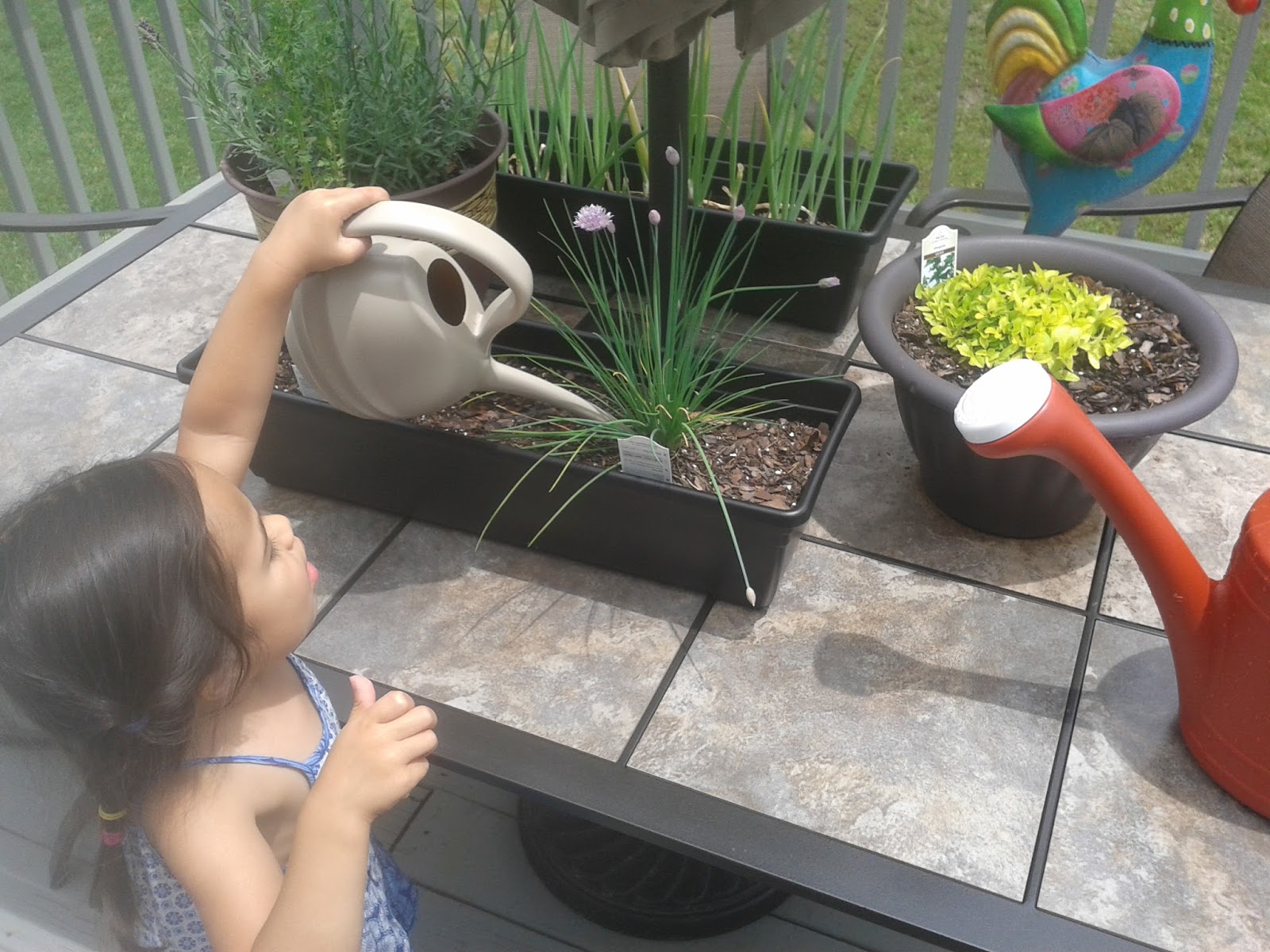 |
| watering our herb garden |
 |
| recycling helper |
 |
| that's my girl |
 |
| forming numerals |
 |
| learning to count |
 |
| watching caterpillar make its chrysalis |
 |
| Can you see our initials? N - Natalia, A - Antonio, T - tata, M - mama |
 |
| camel |
 |
| cow |
 |
| "Jesus on the cross" |
Tuesday, May 23, 2017
Natalka's Preschool April
Still in unschooling mode, though not for long. Plans are in the works for a more intentional, guided early education, focusing on a holistic approach without premature academics.


Natalia's and Antonio's placentas are both buried in this little palm, as a reminder of how they nourished them and now help nourish the palm.
Gardening has begun! We are giving it a go!

Learning about grey water use. Antonio's bath water being used to water our pine trees. Water conservation, baby!


Recently found out Natalka has a Sanguine temperament, which includes a need to be around other people. Very social, I could've told you that. Her favorite activity seems to be walking hand in hand with her friends!


Preparing for Easter with egg coloring and card making....


.... as well as helping with the traditional Polish Easter food basket, brought to church to be blessed.


Speaking of being blessed, here's our little Saint in the Making singing to Jesus in the Adoration Chapel and playing with her Resurrection cut-outs.


 |
| Antonio's placenta going into the kids' palm. |


Natalia's and Antonio's placentas are both buried in this little palm, as a reminder of how they nourished them and now help nourish the palm.
Gardening has begun! We are giving it a go!
 |
| planting green onion cutlings |

Learning about grey water use. Antonio's bath water being used to water our pine trees. Water conservation, baby!
 |


Recently found out Natalka has a Sanguine temperament, which includes a need to be around other people. Very social, I could've told you that. Her favorite activity seems to be walking hand in hand with her friends!


Preparing for Easter with egg coloring and card making....


.... as well as helping with the traditional Polish Easter food basket, brought to church to be blessed.


Speaking of being blessed, here's our little Saint in the Making singing to Jesus in the Adoration Chapel and playing with her Resurrection cut-outs.


 |
| Spotted a bird on our nature walk |
 |
| loves picking wildflowers |
 |
| who doesn't love the sandbox |
 |
| been asking for a bike... |
 |
| touch screen art at the library |
 |
| helping in the kitchen by cutting up mushrooms |
 |
| private moment with Babcia via Skype |
 |
| holding baby alligator at a homeschooling fair |
 |
| learning to share with her baby brother |
Subscribe to:
Posts (Atom)